Founders Voice · 01

Don’t fall in love with your idea, fall in love with your ambition.

Dorian Haci, MintNeuro, and the journey from childhood curiosity to chips that could reshape neurotechnology

Interview by Alberto Emprin September 2026 12 min read
Founders Voice · 01

Non innamorarti della tua idea, innamorati della tua ambizione.

Dorian Haci, MintNeuro e il viaggio dalla curiosità di un bambino ai chip che possono cambiare la neurotecnologia

Intervista a cura di Alberto Emprin Settembre 2026 12 min di lettura
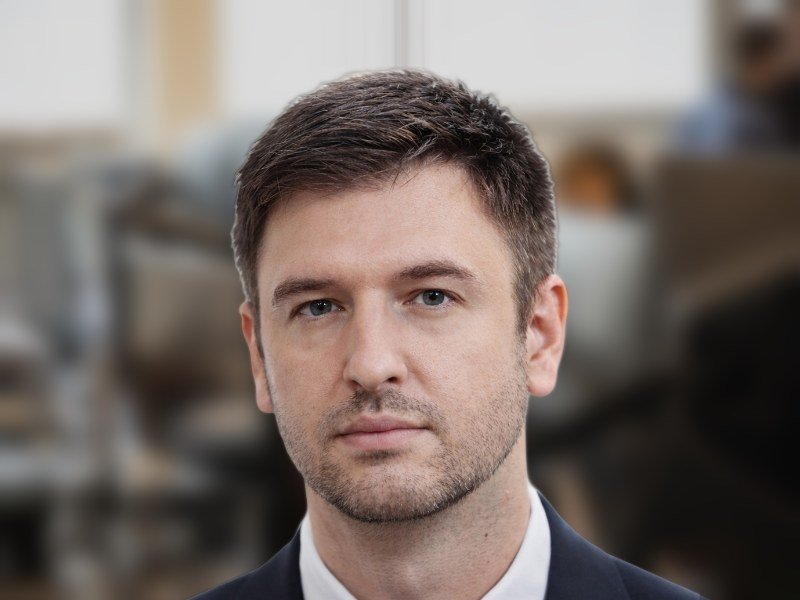
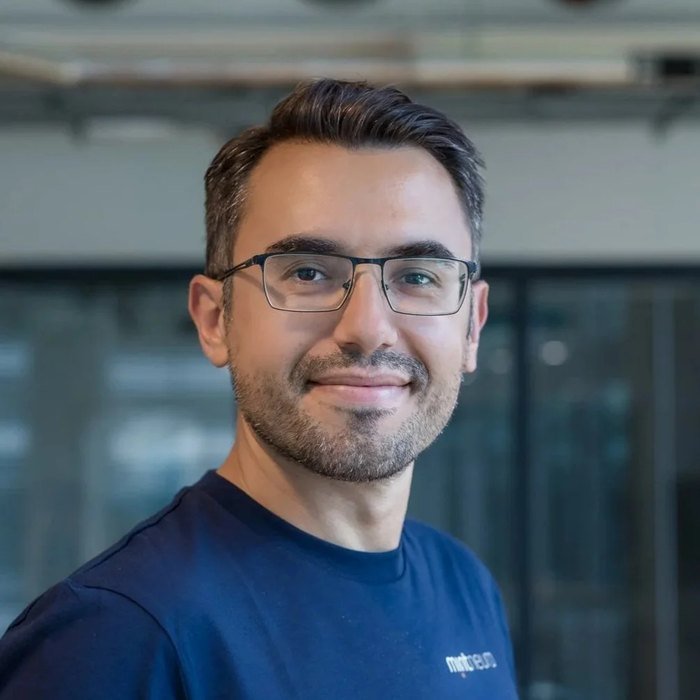
Dorian Haci
Dorian Haci
Co-Founder & CEOCo-Founder & CEO, MintNeuro ↗
Location
London · United Kingdom
Origin
Imperial College London
Sector
Neural interfaces · Implantable devices
Investment
Excellis portfolio · 2024
Sede
Londra · Regno Unito
Origine
Imperial College London
Settore
Interfacce neurali · Dispositivi impiantabili
Investimento
Portafoglio Excellis · 2024

Founders Voice is Excellis's series of conversations with the founders of the companies it backs: the choices, obstacles and ambitions that turn outstanding research into companies capable of shaping the future.Founders Voice è la serie di conversazioni con cui Excellis racconta chi ha fondato le aziende in cui investe: le scelte, gli ostacoli e le ambizioni che trasformano la ricerca d'eccellenza in imprese capaci di incidere sul futuro.

Some founders start with an established market. Others with a commercial insight. Others with a technology.

Dorian Haci’s story begins much earlier: with a child who almost looked forward to something in the house breaking, because that was the moment when he could finally open it up as he pleased.

Radios, video recorders, electronic devices — everything could be taken apart to discover what was inside. Putting it back together was a different matter. His parents would often be left with a few spare components and a very practical question: “What are we supposed to do with these now?”

That curiosity never disappeared.

What changed was the object of it.

Today, Dorian is no longer trying to understand what is inside a video recorder. He is working at the interface between the digital world and one of the most complex systems we know: the human nervous system.

Dorian is co-founder and CEO of MintNeuro, an Imperial College London spin-out developing semiconductors for neural interfaces and implantable medical devices. He is also one of the founders Excellis chose to back.

His story illustrates something fundamental about deep-tech investing: investing in a technology almost always means investing first in the people who will have to transform it, adapt it and bring it into the real world.

01/09

From Albania to Cuneo, then Turin

Dorian was born in Albania but moved to Italy as a child and grew up in Cuneo.

“Albania gave me my birthplace, but Italy gave me everything else,” he says. School, education, friendships and training: the foundations of his personal and professional life were built in Piedmont.

He did not come from a family of engineers. His father taught literature; his mother worked in accounting. His fascination with technology emerged almost spontaneously and was later recognised by people he met along the way. In high school, one teacher told him directly that he should study electrical or electronic engineering.

His parents did something that would prove decisive for the rest of his life: they did not choose for him. They encouraged him to pursue what he enjoyed and what he felt he could become good at.

From Cuneo he moved to Politecnico di Torino, where he studied electronic engineering. In hindsight, he places great value on an aspect of the Italian university model that is often criticised: the broad, theoretical foundation of the first years.

Mathematics, physics, Calculus I, II and III, before he truly entered the field of electronics.

For Dorian, that generalist foundation proved invaluable. It did not simply teach him a particular technology; it trained him to approach different problems before specialising in specific solutions.

During his Master’s degree, he combined two fields that seemed completely divergent: wireless systems design and biological and biomedical systems.

In reality, they were already the two pieces of the puzzle that, years later, would become MintNeuro.

02/09

The sliding door that led to Imperial

During his Master’s, Dorian had the opportunity to carry out his thesis abroad. He knew he wanted to leave Italy for a period, even if he did not yet have a precise project in mind. Like many students, he looked first to the United States; he jokes that he grew up watching Happy Days and dreaming about California.

A meeting with Professor Danilo De Marchi of Politecnico di Torino changed the trajectory. Dorian explained what he was interested in and several opportunities opened up: Columbia, Austin, Stanford and Imperial College London.

Imperial was initially the name he knew least. He started researching it, discovered an exceptional engineering environment and decided to pursue the opportunity.

It was 2014.

He moved to London for six months to work on an electronic board for biomedical DNA-amplification applications. For the first time, he was fully immersed in an advanced research group surrounded by highly specialised researchers.

Dorian noticed the difference from his own training: some colleagues had extraordinary depth of expertise in highly specific technical problems, while he brought broader engineering foundations. The two approaches, he would later realise, could complement each other.

Then came one of those sliding doors that change the course of a life.

It was a Saturday afternoon. Dorian was in the lab testing his board when Tim, his supervisor, asked what he planned to do after returning to Italy.

Dorian did not have a plan yet.

Tim told him there might be an opportunity to return to Imperial as a researcher.

“I think I went white,” Dorian recalls. He had not expected it.

He returned to Italy, completed his Master’s degree and still had to compete for the position like everyone else.

In 2015, he was selected.

And so the six-month stay in London became the beginning of a new life.
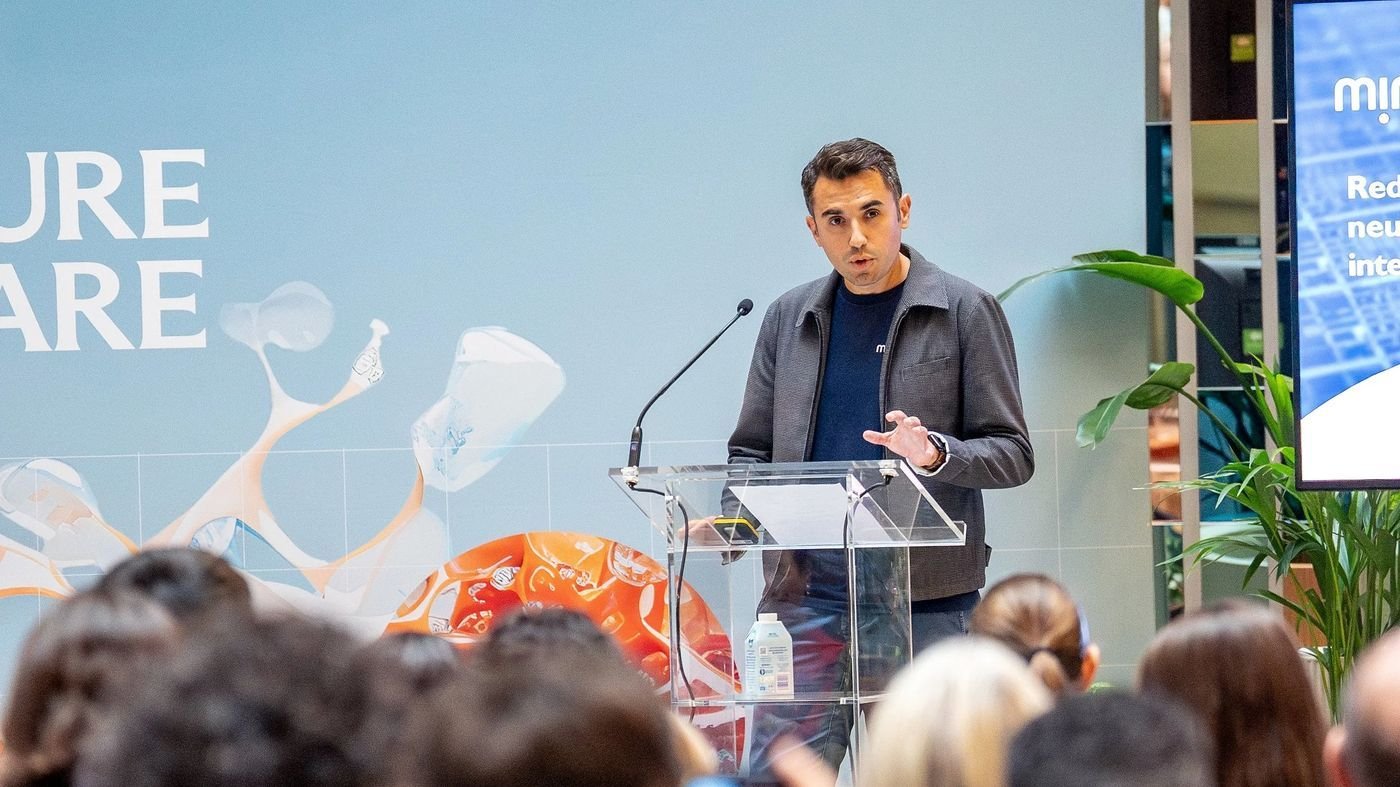
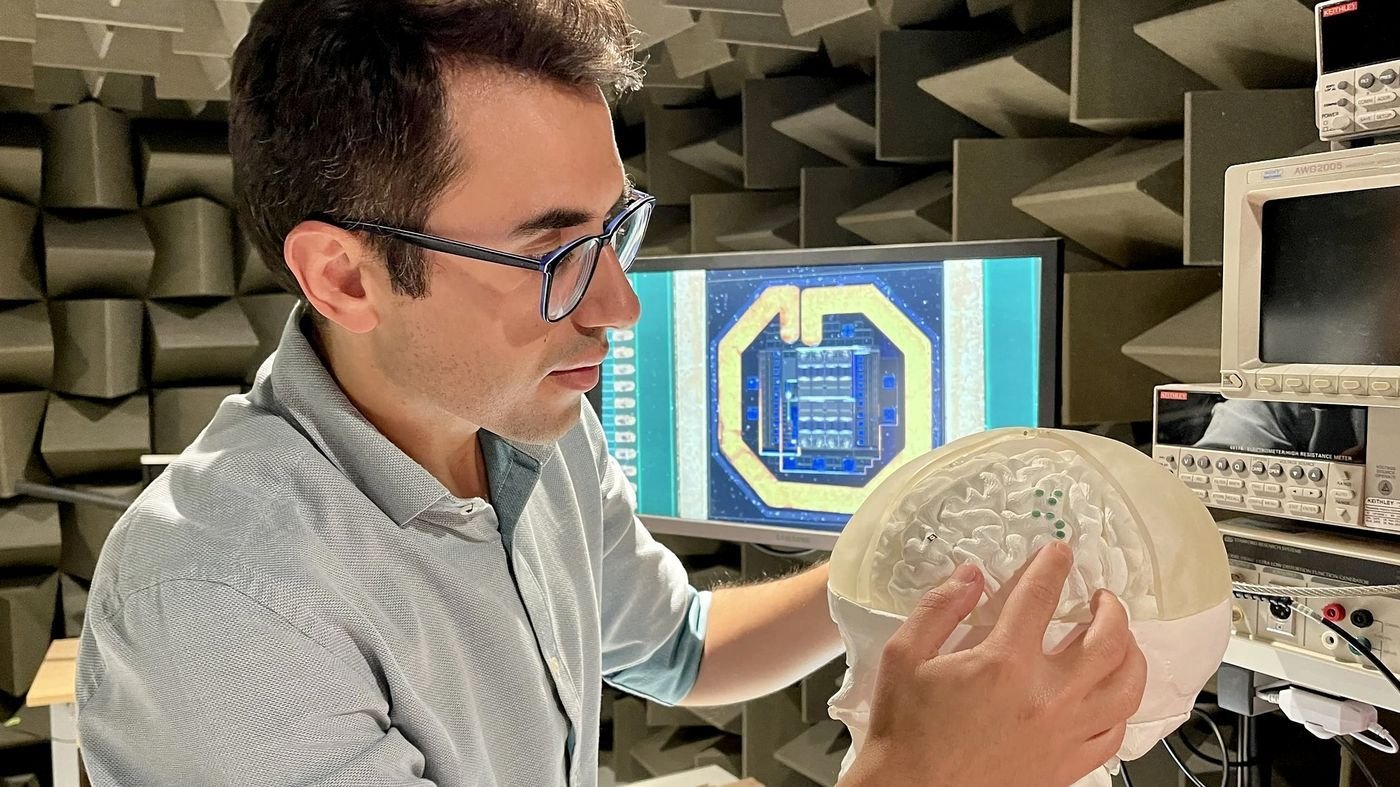
Dorian Haci presents MintNeuro's approach to next-generation neural implants. © MintNeuro
03/09

Where electronics met neuroscience

At Imperial, Dorian entered the field that would ultimately define his career: Next Generation Neural Interfaces.

As a child he had wanted to understand what was inside electronic objects. As he grew older, another curiosity emerged alongside it: understanding what happens inside us.

The brain and nervous system communicate through electrical signals. The ability to read those signals — and in some cases modify them through stimulation — opens the door to new ways of treating disease.

The project Dorian joined focused on epilepsy: developing an implantable device capable of reading brain activity and intervening through electrical stimulation before seizures occur.

He worked as a researcher while also completing a PhD. The project brought together Imperial College, UCL and Newcastle University, with engineers, clinicians and neuroscientists working side by side.

In that environment Dorian learned a skill that rarely appears in scientific papers but would later become essential as a founder: translation.

It was not enough to explain to another electronic engineer how a circuit worked. He also had to explain why it mattered to a clinician, a patient or an industrial partner.

Dorian learned to change his language depending on the person in front of him.

Later, he would do exactly the same with employees, customers and investors.

04/09

“When can my cousin have it?”

The frustration that eventually pushed Dorian toward entrepreneurship also emerged during those research years.

He was working on sophisticated technologies and could see extraordinary possibilities. But there was a gap that was hard to ignore between what was achieved in the laboratory and what actually reached the real world and changed a patient’s life.

When he told people he was working on technology for epilepsy, someone would ask: “My cousin has epilepsy. When can he have this?”

The answer was frustrating: perhaps in ten, fifteen or twenty years.

Research was essential. But Dorian wanted to accelerate the transition from knowledge to impact.

He began to think of a company as a vehicle for turning technology into a product, concentrating resources around a clear mission and moving innovation beyond the laboratory.

There was also a more specific insight. Dorian’s role in the research project was to develop chips for these devices. He realised it was not only their epilepsy project that needed this kind of electronics: other research teams and companies faced similar problems.

Designing semiconductors that can operate at extremely low power, occupy minimal space and remain close to the nervous system for years requires highly specialised expertise.

The problem was therefore much bigger than one application.

05/09

A company we will build together

In 2018, Dorian had his annual review with Tim, by then both his manager and supervisor.

It was the kind of meeting where you look back at the previous year, plan the next and discuss where you might be going.

At one point Dorian threw out a sentence almost as a provocation:

“In five years, I’ll be the CEO of a company we build together.”

Tim looked up from his notes, smiled and told him it was fairly ambitious considering where they were at the time.

“But I like the idea.”

What began almost as a joke became the starting point for a far more serious conversation.

What company? Solving which problem? With what technology? And most importantly: who actually needed it?

This is where the logic of the researcher began to evolve into the logic of the founder.

Extraordinary technology is not enough. There must be a problem for which that technology is a necessary solution.
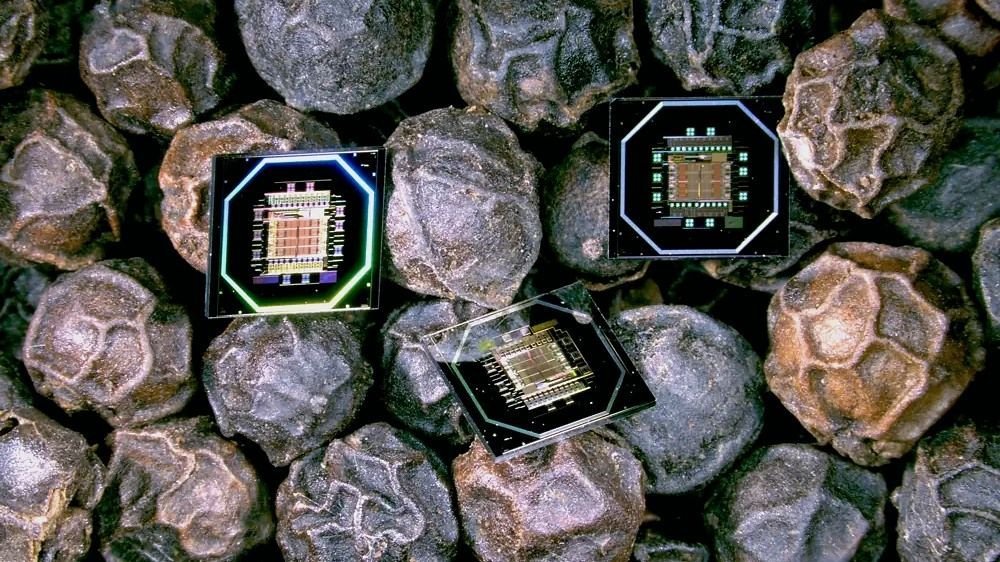
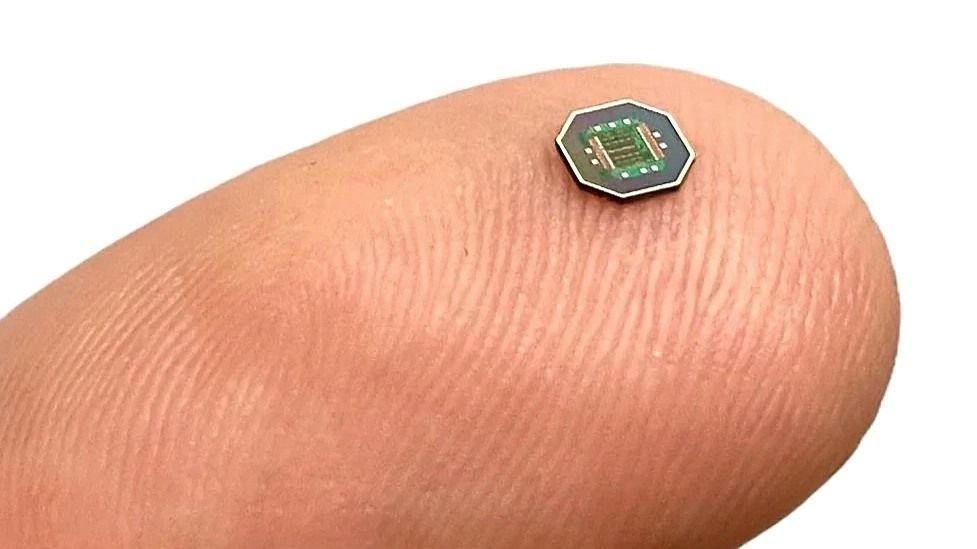
MintNeuro integrated circuits: purpose-built silicon intended to become a reusable platform across neural-interface applications. © MintNeuro
06/09

From an epilepsy project to the MintNeuro platform

After completing his PhD, Dorian joined the Royal Academy of Engineering Enterprise Fellowship, allowing him to spend a year focusing not on academic research itself, but on building a venture.

Told this way, this step also looks linear. In reality, it was not.

His first application was rejected. He applied again six months later and was accepted. In the meantime, Imperial had already sent him the letter marking the end of his time there; a few more weeks and he would have had to find another job.

Another sliding door.

With support from the Imperial ecosystem and the Royal Academy, the spin-out that became MintNeuro began to take shape.

Epilepsy was the natural starting application because the team already had deep expertise and clinical relationships. But a broader insight soon emerged: the same fundamental electronics required to record from and stimulate the nervous system of people with this condition could also enable applications in Parkinson’s disease, neuromodulation, severe depression and other areas.

MintNeuro therefore chose to position itself at a more fundamental layer of the stack: the microchip.

Not necessarily to build every complete device, but to create the essential technological layer on which other companies can more easily develop new devices and new therapies.

Dorian draws an analogy with computing: it would make little sense for every artificial-intelligence company to design its own equivalent of an Nvidia chip from scratch. Yet in neurotechnology, companies are still often forced to develop highly specialised electronics internally.

The result is constant reinvention of the wheel.

MintNeuro wants to reduce that friction.

Its chips are designed to be extremely small and ultra-low power — essential requirements when electronics need to operate inside or very close to the human body.

Reducing size, power consumption and invasiveness is not simply about making a device more elegant. It can mean making a therapy accessible to people who today cannot benefit from devices that are too large or too risky.

That connection between a few millimetres of silicon and potential clinical impact is where MintNeuro becomes unmistakably deep tech.
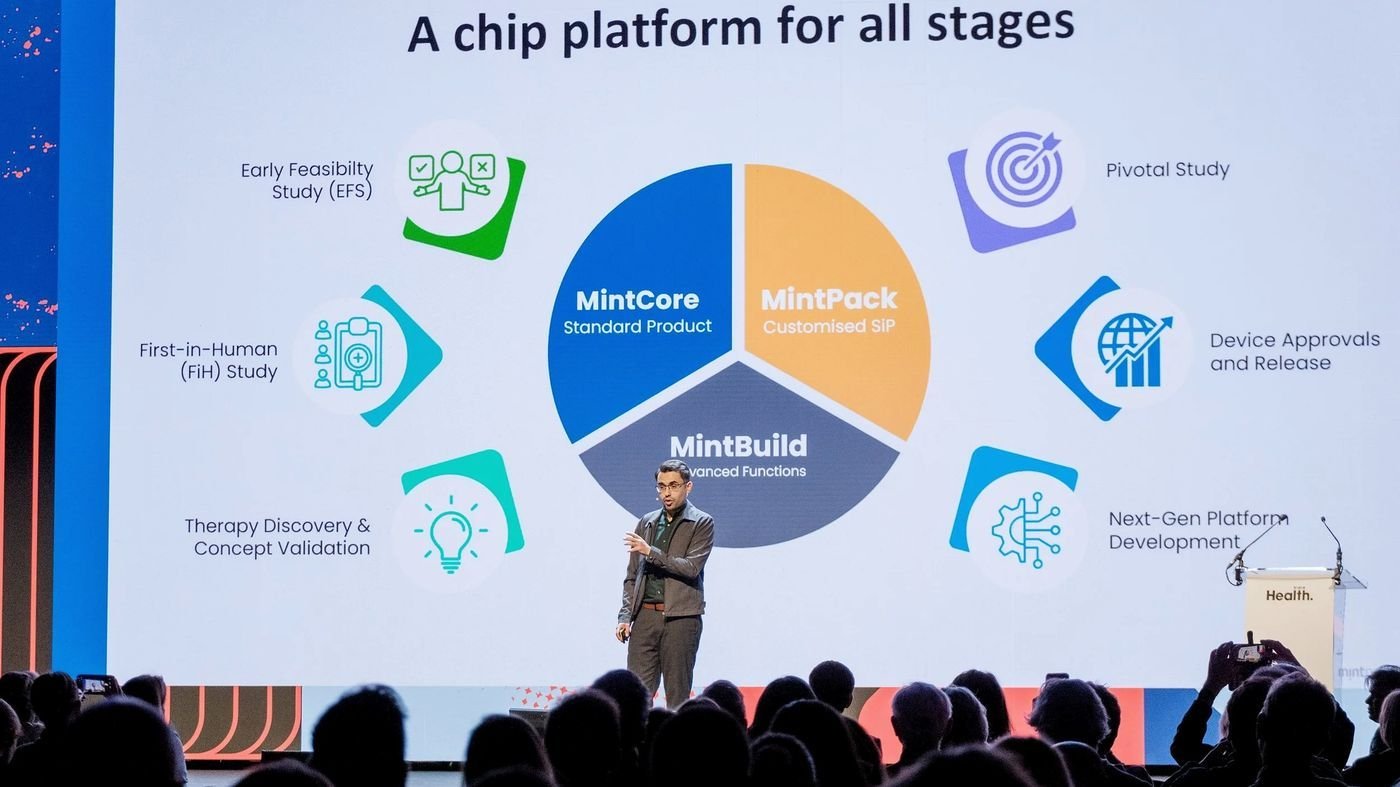
From early research to device approval: a semiconductor platform designed around the medical-development journey. © MintNeuro
07/09

A future between medicine and brain-computer interfaces

Talk about neural interfaces and the conversation inevitably reaches Neuralink and Black Mirror-like scenarios.

Dorian says that whenever an episode involving neural interfaces appears, friends message him asking what he thinks.

His outlook is positive, while recognising the risks it carries.

He sees a clear trajectory: computers moved from machines the size of rooms to personal computers, then smartphones in our pockets, smartwatches and wearables that sit increasingly close to the body.

The interface between humans and technology has been steadily moving closer to us.

For Dorian, a much more direct connection with the nervous system is a plausible next step. As with every major technological transformation, the implications will be both positive and negative. But the possibilities — starting with helping people affected by paralysis or neurological disease — are enormous.

MintNeuro starts there: not from a science-fiction narrative, but from concrete medical needs.

And it is building technology that could make part of that future possible.

08/09

Italy, diaspora and patient capital

After more than a decade in the United Kingdom, Dorian’s relationship with Italy is far from faded.

His wife is Italian, his children are growing up with Italian, British and Albanian identities, and Piedmont, Turin and Cuneo remain important personal reference points.

He sees the Italian education system as an underestimated asset: its ability to build broad foundations before narrow specialisation. And he says that, in the future, he would like to bring some of the entrepreneurial and technological knowledge he has gained abroad back to Italy.

For Excellis, this has particular significance.

Scientific and technological diaspora does not necessarily have to be viewed as a loss that must be reversed. It can be a network that needs to be connected. Value is created when an education acquired in Italy meets international laboratories, markets, capital and cultures — while keeping a bridge to its origins.

Fundraising has also been an education for Dorian.

Building a semiconductor company for implantable medical devices is not the same as launching a software product, shipping it and checking the metrics a few weeks later. There are physical timelines: design, tape-out, manufacturing and testing. There are complex supply chains. Then come qualification, regulation and the realities of the medical-device industry.

That is why Dorian talks about “patient deep tech”.

And that is why he looks for investors who are partners, not simply providers of capital: people who understand the technology’s timeline, open doors, introduce customers, help find talent and stay with the company for many years.

“It’s almost like getting married,” he says. If you are going to spend ten years with someone, it helps if the relationship is a good one.

When talking about Excellis, Dorian highlights precisely this ability to understand both the semiconductor foundation and the medical-device application layer.

It is a useful definition of what a deep-tech investor should try to do: not force a technology into impossible timelines, but help a company move as quickly as possible within the reality of the technology itself.

09/09

Don’t fall in love with the idea

At the end of our conversation, we ask Dorian what advice he would give to a young Italian researcher at Oxford, Cambridge, Imperial or another leading institution who is unsure whether to remain in research, join a large company or attempt the entrepreneurial path.

His first answer is persistence.

Stories tend to look linear in hindsight: application, fellowship, PhD, spin-out, investors.

But that is only the line connecting the points that worked.

Before Imperial, people had said no. Before the Enterprise Fellowship, there had been a rejected application. A startup itself exists continuously between one door opening and another closing.

If something genuinely matters, Dorian says, you have to be willing to try again.

Then comes the market.

A new technology is not enough. There must be a real problem it can solve. The best hammer in the world is of little use if there are no nails.

That is why he encourages researchers to talk about their ideas, seek feedback and engage with customers and partners.

Ideas are plentiful.

Execution is what makes them real.

And finally comes the sentence that perhaps best captures not only MintNeuro’s story, but something essential about being a founder:

“Be in love with the ambition, with the field you are working in. Not with the specific idea. That will keep changing.”

MintNeuro’s ambition has remained enormous: to help enable smaller, less invasive neural devices capable of improving people’s lives.

But the route has evolved.

From epilepsy to a platform. From the complete device to the chip. From research to a company. From an initial idea to what technology and the market revealed to be more important.

And this is precisely what Excellis looks for when investing in deep-tech founders.

Not someone who already has every answer.

Someone with enough depth to understand the problem, enough ambition to want to solve it, enough humility to change direction and enough determination to continue when a door closes.

For Dorian, there is one final ingredient without which the rest matters little: people. “If there is something you can’t do, you need to find someone who can.”

Technology evolves. The idea changes. The market provides feedback. Sliding doors continue to open and close.

But in the end, a company is built by a group of people who decide to walk through them together.

Perhaps that is the thread connecting the child in Cuneo who dismantled video recorders to the CEO of MintNeuro.

The curiosity to open something up and understand how it works is still there.

The difference is that today Dorian is no longer only taking things apart.

He is building.

A chip, a team and — potentially — one of the invisible building blocks of the neurotechnology of the future.
Ci sono founder che partono da un mercato già maturo, altri da un’intuizione commerciale, altri ancora da una tecnologia.

La storia di Dorian Haci parte molto prima: da un bambino che quasi aspettava che qualcosa in casa smettesse di funzionare, perché quello era il momento in cui poteva finalmente aprirlo a suo piacimento.

Radio, videoregistratori, dispositivi elettronici: tutto poteva essere smontato per capire che cosa ci fosse dentro. Rimontarlo, ammette sorridendo, era un’altra questione. I suoi genitori si ritrovavano spesso con qualche pezzo avanzato e una domanda molto concreta: “E adesso cosa ne facciamo?”

Quella curiosità non lo ha mai lasciato.

Solo che oggi ciò che Dorian cerca di comprendere — e di costruire — non è più un videoregistratore. È l’interfaccia fra il mondo digitale fisico e uno dei sistemi più complessi che conosciamo: il sistema nervoso umano.

Dorian è co-founder e CEO di MintNeuro, spin-out nato dall’esperienza di ricerca all’Imperial College London per sviluppare semiconduttori destinati alle interfacce neurali e ai dispositivi medici impiantabili. È anche uno dei founder in cui Excellis ha scelto di investire.

La sua storia racconta bene perché, nel deep tech, investire in una tecnologia significa quasi sempre investire prima di tutto nelle persone che saranno chiamate a trasformarla, adattarla e portarla nel mondo reale.

01/09

Dall’Albania a Cuneo, poi Torino

Dorian nasce in Albania, ma si trasferisce in Italia quando è ancora bambino e cresce a Cuneo.

“L’Albania mi ha dato i natali, ma l’Italia mi ha dato tutto il resto”, racconta. Scuola, educazione, amicizie e formazione: il suo percorso personale e professionale prende forma in Piemonte.

Non proviene da una famiglia di ingegneri. Suo padre insegnava letteratura, sua madre era ragioniera. La passione per la tecnologia nasce quasi spontaneamente, poi viene riconosciuta da alcune persone incontrate lungo il percorso. Al liceo scientifico, un professore gli dice apertamente che dovrebbe studiare ingegneria elettrica o elettronica.

I genitori fanno un’altra cosa decisiva per il seguito della sua vita: non scelgono al posto suo. Gli dicono di fare ciò che gli piace e ciò in cui sente di poter essere bravo.

Da Cuneo arriva così al Politecnico di Torino, dove studia ingegneria elettronica. Con il senno di poi attribuisce grande valore proprio a un elemento spesso criticato del modello universitario italiano: la formazione ampia e teorica dei primi anni.

Matematica, fisica, Analisi I, II e III, prima ancora di entrare davvero nel campo dell’elettronica.

Per Dorian, quella base generalista si è rivelata preziosa: non tanto perché gli abbia insegnato una singola tecnologia, ma perché gli ha insegnato ad affrontare problemi diversi prima di specializzarsi nelle singole soluzioni.

Durante la magistrale combina due direzioni che sembrano totalmente divergenti: wireless systems design e sistemi biologici e biomedici. In realtà, sono già i due pezzi di quel puzzle che anni dopo diventerà MintNeuro.

02/09

La sliding door che porta all’Imperial

Durante la magistrale Dorian ha l’opportunità di svolgere la sua tesi all’estero. Vuole partire, anche se non ha ancora un progetto preciso. Come molti studenti, guarda agli Stati Uniti: racconta che da ragazzo vedeva Happy Days e fantasticava sulla California.

A cambiare la traiettoria è un incontro con il professor Danilo De Marchi del Politecnico di Torino. Dorian gli racconta che cosa gli interessa e davanti a lui si aprono diverse possibilità: Columbia, Austin, Stanford e Imperial College London.

Imperial è inizialmente il nome che conosce meno. Comincia a informarsi, scopre un ambiente di altissimo livello nell’ingegneria e decide di provarci.

È il 2014.

Arriva a Londra per sei mesi e lavora su una scheda elettronica per applicazioni biomediche legate all’amplificazione del DNA. Per la prima volta entra davvero in un gruppo di ricerca avanzata, circondato da ricercatori estremamente specializzati.

Dorian nota la differenza rispetto alla propria formazione: alcuni colleghi hanno una profondità di competenza straordinaria su problemi molto specifici, mentre lui porta una preparazione più generalista. Le due cose, capirà in seguito, possono essere complementari.

Poi arriva una di quelle sliding doors che cambiano il percorso di una vita.

È un sabato pomeriggio. Dorian è in laboratorio a fare test sulla sua scheda quando Tim, il suo supervisor, gli chiede che cosa intenda fare dopo il ritorno in Italia.

Dorian non ha ancora un piano.

Tim gli dice che potrebbe esserci la possibilità di tornare all’Imperial come ricercatore.

“Credo di essere diventato bianco”, ricorda. Non se l’aspettava.

Rientra in Italia, conclude la magistrale e affronta comunque la selezione come tutti gli altri candidati. Nel 2015 viene scelto.

La parentesi londinese diventa così l'inizio di una nuova vita.

Dorian Haci nel laboratorio di neurotecnologia: il punto d'incontro fra circuiti, segnali biologici e applicazioni cliniche. © MintNeuro
03/09

Quando elettronica e neuroscienze si incontrano

All’Imperial Dorian entra nel mondo che finirà per definire la sua carriera: quello delle Next Generation Neural Interfaces.

Da bambino voleva capire che cosa ci fosse dentro gli oggetti elettronici. Crescendo, a quella curiosità se ne era aggiunta un’altra: capire come funzioniamo noi.

Il cervello e il sistema nervoso comunicano attraverso segnali elettrici. Poter leggere quei segnali — e, in alcuni casi, modificarli attraverso una stimolazione — significa aprire la strada a nuove modalità di trattamento di diverse patologie.

Il progetto su cui Dorian comincia a lavorare riguarda l’epilessia: un dispositivo impiantabile capace di leggere l’attività cerebrale e intervenire attraverso la stimolazione elettrica prima dell'arrivo delle convulsioni.

Lavora come ricercatore e contemporaneamente porta avanti un dottorato. Il progetto coinvolge Imperial College, UCL e Newcastle University e riunisce ingegneri, medici e neuroscienziati.

In quel contesto impara una competenza che non compare normalmente nei paper scientifici, ma che sarà fondamentale da founder: tradurre.

Non basta spiegare che un circuito funziona in un certo modo ad un altro ingegnere elettronico. Bisogna far capire perché quel risultato conta anche al medico, al paziente o al partner industriale.

Dorian impara a cambiare linguaggio a seconda dell’interlocutore. Più avanti dovrà fare lo stesso con dipendenti, clienti e investitori.

04/09

“Quando potrà averlo mio cugino?”

È proprio nella ricerca che nasce anche l’insoddisfazione che lo porterà all’impresa.

Dorian lavora su tecnologie sofisticate e vede possibilità straordinarie. Ma avverte una distanza difficile da ignorare fra ciò che viene realizzato in laboratorio e ciò che arriva realmente nel mondo reale e cambia la vita di un paziente.

Quando racconta di lavorare su un sistema per trattare l’epilessia, qualcuno gli domanda: “Mio cugino soffre di epilessia. Quando potrà averlo?”

La risposta è frustrante: forse tra dieci, quindici, vent’anni.

La ricerca è indispensabile. Ma Dorian vuole accelerare il passaggio fra conoscenza e impatto.

Comincia così a pensare che un’azienda possa essere il veicolo per trasformare una tecnologia in un prodotto, concentrare risorse su una missione e portare innovazione fuori dal laboratorio.

C’è poi un elemento ancora più specifico. Nel progetto Dorian sviluppa chip destinati a questi dispositivi. Si rende conto che non è soltanto il loro lavoro sull’epilessia ad averne bisogno: altri gruppi e aziende stanno affrontando problemi simili.

Progettare semiconduttori capaci di operare a bassissima potenza, occupare pochissimo spazio e restare vicini al sistema nervoso per anni richiede competenze estremamente specialistiche.

Il problema, dunque, è più grande della singola applicazione.

05/09

Un’azienda che faremo insieme

Nel 2018 Dorian ha il colloquio annuale con Tim, che è ormai il suo capo e supervisor.

È una di quelle riunioni in cui si guarda all’anno appena trascorso, si pianifica quello successivo e si parla anche del futuro.

A un certo punto Dorian lancia una frase quasi come una provocazione:

“Tra cinque anni sarò CEO di un’azienda che faremo insieme.”

Tim alza la testa dal blocco degli appunti, sorride e gli risponde che è un obiettivo piuttosto ambizioso, considerando dove si trovano in quel momento.

“Ma mi piace l’idea.”

Quella battuta diventa il punto di partenza di una conversazione molto più seria.

Quale azienda? Per risolvere quale problema? Con quale tecnologia? E soprattutto: chi ne ha davvero bisogno?

È qui che la logica del ricercatore comincia a trasformarsi in quella del founder.

Non basta avere qualcosa di tecnologicamente straordinario. Bisogna trovare il problema per cui quella tecnologia rappresenta una soluzione necessaria.

Il chip MintNeuro sulla punta di un dito: dimensioni e consumo energetico sono vincoli clinici, non semplici specifiche tecniche. © MintNeuro
06/09

Dal progetto sull’epilessia alla piattaforma MintNeuro

Dopo il dottorato, Dorian entra nell’Enterprise Fellowship della Royal Academy of Engineering, che gli permette di dedicare un anno non più alla ricerca in senso stretto, ma alla costruzione di una venture.

Anche questo passaggio, raccontato così, sembra lineare. Ma in realtà non lo è stato.

La sua prima candidatura viene respinta. Dorian riprova sei mesi dopo e viene selezionato. Nel frattempo Imperial gli aveva già inviato la lettera che segnava la fine del suo percorso; ancora poche settimane, e si sarebbe dovuto trovare un altro lavoro.

Un’altra sliding door.

Con il supporto dell’ecosistema Imperial e della Royal Academy prende forma lo spin-out che diventerà MintNeuro.

L’epilessia rappresenta l’applicazione iniziale perché è lì che il team ha competenze profonde e relazioni cliniche. Ma presto arriva l’intuizione più ampia: lo stesso tipo di elettronica necessaria per leggere e stimolare il sistema nervoso per chi soffre di questa malattia può abilitare anche applicazioni nel Parkinson, nella neuromodulazione, nella depressione severa e in altre aree.

MintNeuro decide allora di posizionarsi a un livello più fondamentale dello stack: il microchip.

Non costruire necessariamente ogni dispositivo completo, ma creare quell'indispensabile layer tecnologico su cui altre aziende possano sviluppare più facilmente nuovi dispositivi e nuove terapie.

Dorian usa un parallelo con il computing: non avrebbe senso che ogni azienda di intelligenza artificiale dovesse progettare da zero il proprio equivalente di un chip Nvidia. Nella neurotecnologia, invece, è ancora frequente che ciascun player sia costretto a sviluppare internamente componenti molto specializzati.

Il risultato è una continua reinvenzione della ruota.

MintNeuro vuole ridurre quella frizione.

I suoi chip sono pensati per essere estremamente piccoli e a bassissima potenza: requisiti fondamentali quando l’elettronica deve operare all’interno o molto vicino al corpo umano.

Ridurre dimensioni, consumi e invasività non significa soltanto rendere un dispositivo più elegante. Può voler dire rendere una terapia accessibile a persone che oggi non possono beneficiare di dispositivi troppo grandi o troppo rischiosi.

È in questa connessione fra pochi millimetri di silicio e un possibile impatto clinico che la storia di MintNeuro diventa profondamente deep tech.

07/09

Un futuro fra medicina e brain-computer interfaces

Quando si parla di interfacce neurali, la conversazione arriva inevitabilmente a Neuralink e agli scenari da Black Mirror.

Dorian racconta che ogni volta che esce una puntata della serie sulle interfacce neurali, gli amici gli scrivono per chiedergli che cosa ne pensi.

La sua visione è positiva, pur senza ignorare i rischi che rappresenta.

Osserva una traiettoria semplice: i computer sono passati da macchine grandi come stanze ai personal computer, poi agli smartphone nelle nostre tasche, agli smartwatch e ai dispositivi indossabili sempre più aderenti al corpo.

L’interfaccia con la tecnologia si è progressivamente avvicinata a noi.

Per Dorian è plausibile che il passo successivo sia una connessione molto più diretta con il sistema nervoso. Le implicazioni saranno positive e negative, come per ogni grande trasformazione tecnologica. Ma le possibilità, a partire dall’aiuto a persone con paralisi o malattie neurologiche, sono enormi.

MintNeuro parte da qui: non dall’immaginario futuristico, ma da bisogni medici concreti.

E costruisce la tecnologia che potrebbe rendere possibile una parte di quel futuro.

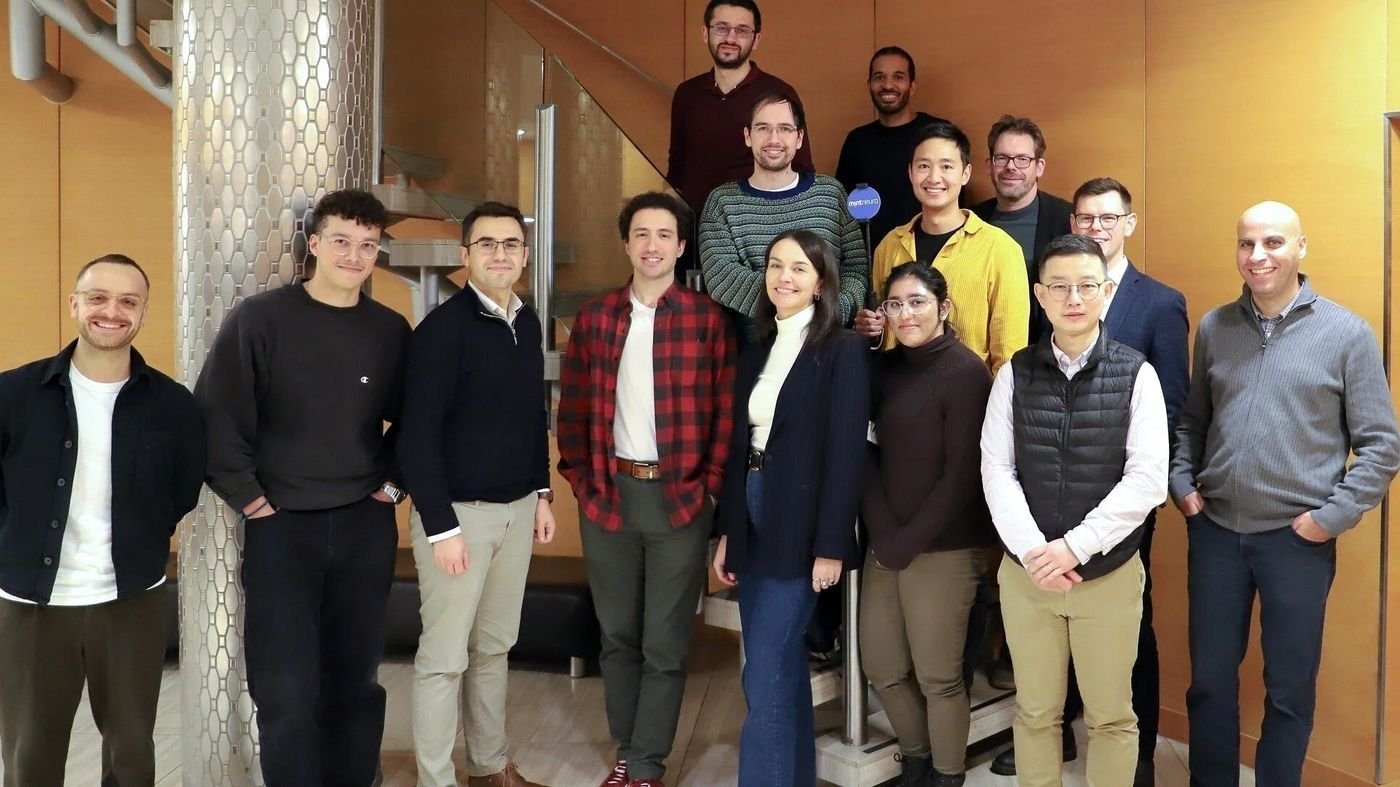
Il team MintNeuro: semiconduttori, medicina e neurotecnologia nello stesso progetto industriale. © MintNeuro
08/09

Italia, diaspora e capitale paziente

Dopo più di dieci anni nel Regno Unito, il rapporto di Dorian con l’Italia è tutt’altro che sbiadito.

Sua moglie è italiana, i figli crescono con identità italiane, britanniche e albanesi, e il Piemonte, Torino e Cuneo restano punti di riferimento personali.

Dorian vede nella formazione italiana un capitale spesso sottovalutato: quella capacità di muoversi fra discipline diverse e costruire basi ampie prima di specializzarsi. E dice che, in futuro, gli piacerebbe riportare parte della conoscenza imprenditoriale e tecnologica acquisita all’estero in Italia.

È un punto che per Excellis ha un significato particolare.

La diaspora scientifica e tecnologica non deve essere necessariamente letta come una perdita da invertire. Può essere una rete da connettere. Il valore nasce quando la formazione ricevuta in Italia incontra laboratori internazionali, mercati, capitali e culture diverse, mantenendo però un ponte con le proprie origini.

Anche il fundraising, per Dorian, è stato una scuola.

Costruire una società di semiconduttori per dispositivi medici non significa creare un prodotto software, lanciarlo e osservare le metriche poche settimane dopo. Ci sono tempi fisici: progettazione, tape-out, produzione, test. Ci sono supply chain complesse. E poi qualificazioni, regolamentazione e rapporti con il mondo medicale.

Per questo parla di "patient deep tech".

E per questo cerca investitori che siano partner, non semplicemente fornitori di capitale: persone capaci di capire i tempi della tecnologia, aprire porte, presentare clienti, aiutare a trovare talenti e accompagnare l’azienda per molti anni.

“È quasi come sposarsi”, dice. Se devi passare dieci anni con qualcuno, è meglio che sia un buon rapporto.

Parlando di Excellis, sottolinea proprio la capacità di comprendere contemporaneamente la base tecnologica dei semiconduttori e il settore applicativo dei dispositivi medici.

È una definizione molto concreta di ciò che un investitore deep-tech dovrebbe provare a fare: non forzare la tecnologia a seguire tempi impossibili, ma aiutare l’azienda a muoversi il più velocemente possibile dentro la realtà della tecnologia stessa.

09/09

Non innamorarsi dell’idea

Alla fine della conversazione chiediamo a Dorian quale consiglio darebbe a un giovane ricercatore italiano a Oxford, Cambridge, Imperial o in un altro centro d’eccellenza, indeciso se continuare nella ricerca, entrare in una grande azienda o provare la strada imprenditoriale.

La prima risposta è la perseveranza.

Le storie, viste dopo, tendono a sembrare lineari: application, fellowship, dottorato, spin-out, investitori.

Ma quella è soltanto la linea che unisce i punti che hanno funzionato.

Prima dell’Imperial ci sono state persone che hanno detto no. Prima dell’Enterprise Fellowship c’è stata una candidatura respinta. Una startup vive continuamente fra una porta che si apre e una che si chiude.

Se qualcosa conta davvero, dice Dorian, bisogna essere disposti a provarci di nuovo.

Poi viene il mercato.

Una tecnologia nuova non basta. Deve esistere un problema reale che quella tecnologia può risolvere. Avere il miglior martello del mondo serve a poco se non esistono chiodi.

Per questo invita i ricercatori a parlare della propria idea, cercare feedback e confrontarsi con clienti e partner.

Le idee sono molte.

L’esecuzione è ciò che le rende reali.

Infine arriva la frase che forse meglio riassume non soltanto la storia di MintNeuro, ma una parte essenziale del mestiere di founder:

“Bisogna essere innamorati dell’ambizione, del campo in cui si opera. Non della specifica idea. Quella cambierà continuamente.”

L’ambizione di MintNeuro è rimasta enorme: contribuire a rendere possibili dispositivi neurali più piccoli, meno invasivi e capaci di migliorare la vita delle persone.

Ma il percorso è cambiato.

Dall’epilessia alla piattaforma. Dal dispositivo completo al chip. Dalla ricerca all’impresa. Dall’idea iniziale a ciò che il mercato e la tecnologia hanno mostrato essere più importante.

Ed è precisamente questo che Excellis cerca quando investe in un founder deep-tech.

Non qualcuno che abbia già tutte le risposte.

Ma qualcuno con sufficiente profondità per capire il problema, sufficiente ambizione per volerlo risolvere, sufficiente umiltà per cambiare strada e sufficiente determinazione per continuare quando una porta si chiude. Per Dorian c’è poi un ultimo ingrediente senza il quale tutto il resto conta poco: le persone.

“Se c’è qualcosa che non sai fare, devi trovare qualcuno che lo sappia fare.”

La tecnologia evolve. L’idea cambia. Il mercato restituisce feedback. Le sliding doors continuano ad aprirsi e chiudersi.

Ma alla fine un’azienda viene costruita da un gruppo di persone che decide di attraversarle insieme.

Forse è questo il tratto che collega meglio il bambino di Cuneo che smontava i videoregistratori al CEO di MintNeuro.

La curiosità di aprire qualcosa per capire come funziona è rimasta la stessa.

Solo che oggi Dorian non si limita più a smontare.

Sta costruendo.

Un chip, un team e — potenzialmente — uno dei tasselli invisibili della neurotecnologia del futuro.

Why this story matters

Technology changes. Ambition endures.

For Excellis, Dorian's value lies in the combination of scientific depth, an ability to listen and global ambition. He represents the kind of founder for whom technology is not the destination, but the instrument for building a company capable of shaping the future.

Perché questa storia conta

La tecnologia cambia. L'ambizione resta.

Per Excellis, il valore di Dorian sta nell'unione di profondità scientifica, capacità di ascolto e ambizione globale. È il tipo di founder per cui la tecnologia non è il punto di arrivo, ma lo strumento con cui costruire un'impresa capace di incidere sul futuro.

Story based on Alberto Emprin's interview with Dorian Haci. Photography and product imagery: © MintNeuro, sourced from mintneuro.com. Images have been lightly cropped and colour-balanced for editorial layout.Storia basata sull'intervista di Alberto Emprin a Dorian Haci. Fotografie e immagini di prodotto © MintNeuro, tratte da mintneuro.com. Immagini leggermente ritagliate e bilanciate nei colori per l'impaginazione.

Visit MintNeuroVisita MintNeuro ↗ Dorian Haci · LinkedIn ↗

More from Founders VoiceAltre storie di Founders Voice

All storiesTutte le storie →
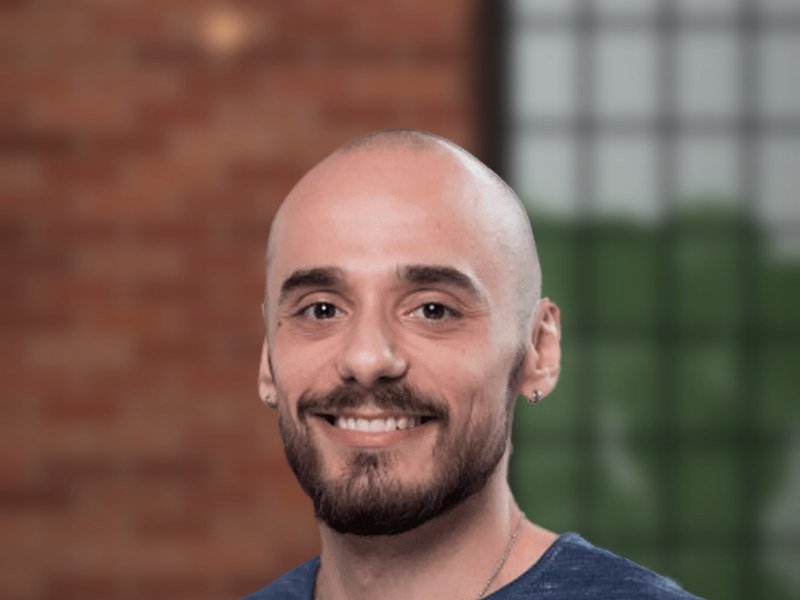
Alessandro Aimar
Founders Voice · 02

Go and let people tell you no. And then ask them why.

Andate, fatevi dire di no. E poi chiedete perché.

Alessandro Aimar · Co-Founder & CTOCo-Founder & CTO, Synthara
Coming soonIn arrivo
Marco Pietropaoli
Founders Voice · 03

No customer will pay you just to look at a perfect solution.

Nessun cliente ti pagherà solo per guardare una soluzione perfetta.

Marco Pietropaoli · CEO & Co-FounderCEO & Co-Founder, ToffeeX